CHI's Inaugural
AI Strategy and Business Value in Clinical Development
Driving AI ROI, Impact, and Value
May 18 - 19, 2026 ALL TIMES EDT
Monday, May 18
7:45 amRegistration and Morning Coffee
8:25 amOrganizer's Welcome Remarks
SCALING AI INNOVATION
AI-Enabled Patient Voice Integration in Digital Protocol Design
 Mary Jo Lamberti, PhD, Director and Research Associate Professor, Tufts Center for the Study of Drug Development (CSDD)

Patient perspectives have long informed clinical trial design, but AI now makes this process scalable. This session explores how AI-driven tools capture and analyze patient insights across larger populations, informing endpoint selection, digital protocols, and trial workflows. Panelists will share strategies for leveraging AI to enhance trial relevance, engagement, and outcomes while maintaining scientific rigor and regulatory compliance.
Clinical Trial Optimization in Practice: Leveraging Data and Technology to Drive Operational Impact
 Edwin White, Senior Director, Data Science, GCTO/MRL, Merck
The clinical operations environment is becoming increasingly challenging in the execution of clinical studies. Industry-wide, the clinical trials landscape is becoming more saturated, leading to delays and growing execution risks across late-phase clinical study portfolios. This session will illustrate these challenges and demonstrate how Merck is mitigating risk through the use of data, technology, and process improvements to better serve patients.
Best Practices for AI Implementation
 Janie Hansen, formerly Business Systems Transformation, Global Development Information Management, Daiichi Sankyo, Inc.
AI is transforming clinical trials, but successful implementation requires careful planning and execution. This session explores best practices, strategies, and approaches for integrating AI into trial design, operations, and data management. This presentation will feature practical lessons on workflow adaptation, team training, regulatory considerations, and measuring impact to ensure AI adoption drives efficiency, data quality, and meaningful clinical outcomes.
 Audit‑Ready Analytics in Clinical Development: What Changes When AI Enters the Workflow
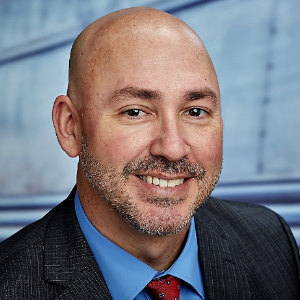 Matt Becker, Life Science Strategic Advisor, Healthcare & Life Science Industry Solutions, SAS Institute Inc.
As clinical analytics become more automated, regulatory agencies are increasingly focused on understanding how results were produced, not just what they show. This has elevated the importance of audit‑ready analytics and clear data lineage across the clinical development lifecycle. This session focuses on practical changes sponsors are making to support audit readiness, including the use of large language models to automate data transformation and the generation of tables, listings, and figures for regulatory submission. We will examine how embedding these capabilities into governed analytics workflows reduces manual effort, improves consistency, and supports smoother regulatory interactions across programs.
10:35 amGrand Opening Coffee Break in the Exhibit Hall
AI TO TRANSFORM CLINICAL DEVELOPMENT
Leveraging AI to Transform Site Engagement in Clinical Trials
 Vidhya Gedela, Director, Patient & Site Engagement Products, Global Development Operations IT R&D Business Insights and Technology, Bristol Myers Squibb Co.

In this session, we will be speaking about our foundational work to reduce tech burden for clinical trial sites, the use of AI to boost productivity and operational excellence for our internal teams, and our roadmap for further AI integration to a frictionless Site Engagement.
Operationalizing AI in Clinical Trials: From Strategy to Scalable Impact
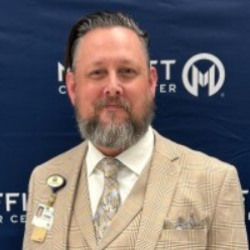
 Milijana Ugrenovic-Petrovic, MPM Senior Director, Clinical Research Operations, Moffitt Cancer Center
This presentation will share Moffitt Cancer Center’s journey in embedding AI into clinical trials operations, highlighting real-world use cases, implementation strategies, and measurable outcomes. Drawing from initiatives such as EHR-to-EDC integration, AI-enabled prescreening, and CPOE deployment, it will offer a practical roadmap for scalable AI adoption aligned with institutional goals.
Evaluating End-to-End Agentic AI Workflows for Clinical Trials
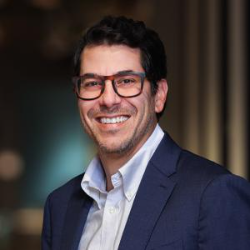 Micky Cohen-Wolkowiez, MD, PhD, Executive Director, i-Cubed, Duke Clinical Research Institute
Clinical trials remain slow, fragmented, and operationally complex. Project Loom evaluates whether agentic AI workflows can execute trials end-to-end, from protocol generation through participant engagement and analysis. In a prospective simulation, multi-agent systems compressed timelines from months to days while maintaining high data fidelity under human oversight. We present performance, limitations, and a practical framework for where AI can (and cannot yet) reliably transform trial execution.
 From Start-Up to Scale: Lessons Learned from Widespread Deployment of AI-Driven Technology for Cancer Clinical Trial Operations
 Ivy Altomare, MD, Vice President of Clinical Research, Paradigm Health
Scaled deployment and adoption of AI-enabled technology requires careful integration with clinical and operational workflows. Delivering value is multifactorial and includes deep understanding of site capabilities and specific trial context. We will share insights gained regarding factors affecting LLM performance, resourcing, change management, and impact measurement, and will review two case studies where approaches have produced measurable operational improvements. We conclude with practical lessons for clinical development leaders deploying AI technology at scale.
 Applied AI Today and Tomorrow in Global Patient Recruitment
 Matt Walz, CEO, Business Operations, Trialbee
Although AI is clearly in focus for clinical trial recruitment, most implementations are early, fragmented, or difficult to evaluate in terms of real-world impact.
In this session, Matt Walz, CEO of Trialbee, shares a practical perspective on applied AI approaches trained on real recruitment data, integrated into existing workflows, and evaluated based on operational outcomes. Using examples from active recruitment programs, the session will explore where AI is supporting global patient recruitment today and what is on the horizon for the next 12 months.
Attendees will:
Understand the difference between experimental (“sandbox”) AI and operational, applied AI in global patient recruitment today
Identify where AI is currently supporting recruitment across the patient funnel
Recognize how data quality, workflow integration, and governance influence outcomes
Transforming End-to-End Clinical Development through AI
 Jorge Reis-Filho, PhD, Chief of AI for Science Innovation, Enterprise AI Unit, AstraZeneca
AI is rapidly transforming clinical development, and we are approaching a future where frontier AI models will outperform humans in complex reasoning tasks. To have the maximum impact on improving patient outcomes, AstraZeneca is applying AI across oncology R&D to help deliver on its bold ambition of one day eliminating cancer as a cause of death.
 LUNCHEON PRESENTATION: Revolutionize Clinical Trial Financial Management with Agentic AI
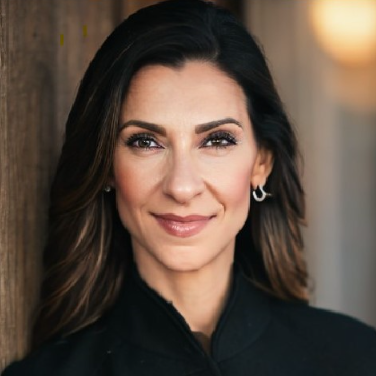 Zee Zee Gueddar, Senior Director & Commercial Lead, Financial Strategy, IQVIA
Join this session to explore how Agentic AI accelerates every step of your financial workflow—from protocol ingestion to budgeting, contracting, payments, and analytics. Learn how an AI-powered unified platform eliminates disparate silos, automates manual processes, and delivers measurable business value. Explore real-world AI-use cases where your team's role shifts from doing, to reviewing, enabling faster decisions and ensuring patient and site success.
2:05 pmRefreshment Break in the Exhibit Hall
PLENARY SESSION
Validating Generative AI for Clinical Development
 Pratik Shah, PhD, Professor, Pathology & Laboratory Medicine, Electrical Engineering & Computer Science, and Biomedical Engineering, University of California
The development of robust AI for clinical development is limited by scarcity of large-scale annotated datasets and clear frameworks for real-world translation. This talk will present examples of clinically validated generative AI that enhances clinical-trial efficiency, evidence generation, and patient outcomes. The discussion will conclude with a regulatory-science perspective on emerging challenges and necessary standards for validating and approving complex, AI-enabled medical devices for safe and effective patient care.
Investing in the AI-Driven Future of Clinical Development
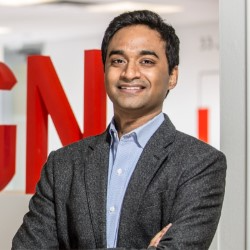


AI is transforming every stage of clinical development, generating unprecedented investment activity across venture capital and pharmaceutical corporate venture arms. This plenary panel brings together a cross-section of investors to discuss where capital is flowing, what technologies show the strongest near-term value, and which business models are most likely to endure. Attendees will gain a clear view of how investors are prioritizing innovation in clinical development and what signals they are watching to guide future deployments of capital.
INTERACTIVE DISCUSSIONS
Interactive Breakout Discussions are informal, moderated discussions, allowing participants to exchange ideas and experiences and develop future collaborations around a focused topic. Each breakout will be led by a facilitator who keeps the discussion on track and the group engaged. Please visit the Interactive Breakout Discussions page on the conference website for a complete listing of topics and descriptions. Interactive Breakout Discussions are offered in-person only.
4:40 pmNetworking Reception in the Exhibit Hall
5:40 pmDinner Short Course Registration
*Separate registration required. See short course page for details.
6:00 pmDINNER SHORT COURSE: AI Implementation in Practice: A Hands-on Short Course (Bring Your Laptop)
INSTRUCTORS:
Prasanna Rao, Chief Products and Innovation Officer, Saama
This interactive workshop will provide a practical overview of key considerations for implementing AI in clinical operations and beyond. Topics will include ethical implications and regulatory updates such as the EU AI Act, a clear explanation of AI APIs and how they function, and best practices for effective prompt engineering. Attendees will gain valuable insights into common pitfalls to avoid strategies to successfully integrate AI tools in a regulated environment.
Tuesday, May 19
8:30 am"Bytes and Bites" in the Exhibit Hall
Join your colleagues for coffee and a quick bite before diving into another day of sessions.
AI-PROMPTED CHANGE MANAGEMENT

From Tools to Transformation: Rebuilding the Clinical Trial Ecosystem with AI
 David Carruthers, Vice President, BioPharmaceuticals R&D Clinical Operations, AstraZeneca
AI adoption in Clinical Trials is stuck in low-impact pilots. The real opportunity is not better tools, but a fundamentally different ecosystem. This talk explores how next-gen technology can reshape protocols, site-selection, data flow, and decision-making across the ecosystem. Drawing from frontline experience, we will move beyond incremental pilots to what it actually takes to deliver faster, simpler, and more scalable clinical development.
AI in Clinical Trials: Building Skilled Teams
 Angela Radcliffe, Founder, Intelligence Applied AI
AI is transforming clinical trials, but its success depends on skilled, prepared teams. This session explores strategies for training clinical operations, data, and trial management teams to effectively use AI tools. This presentation will discuss best practices for upskilling staff, integrating AI into workflows, and ensuring data quality, compliance, and trial efficiency while fostering collaboration and adoption across teams.
AI Governance at the Site: Practical Frameworks Sites Need Now
 Jimmy Bechtel, Chief Site Success Officer, Society for Clinical Research Sites (SCRS)
As AI adoption accelerates in clinical research, sites face growing pressure to implement new tools while navigating unclear governance frameworks, limited training, and fragmented technologies. At the same time, sites are increasingly evaluated by opaque AI-driven algorithms for feasibility, selection, and performance. This presentation explores the site perspective on AI governance, operational integration, and trust—and why meaningful AI transformation in clinical trials depends on genuine partnership and successful implementation at the site level.

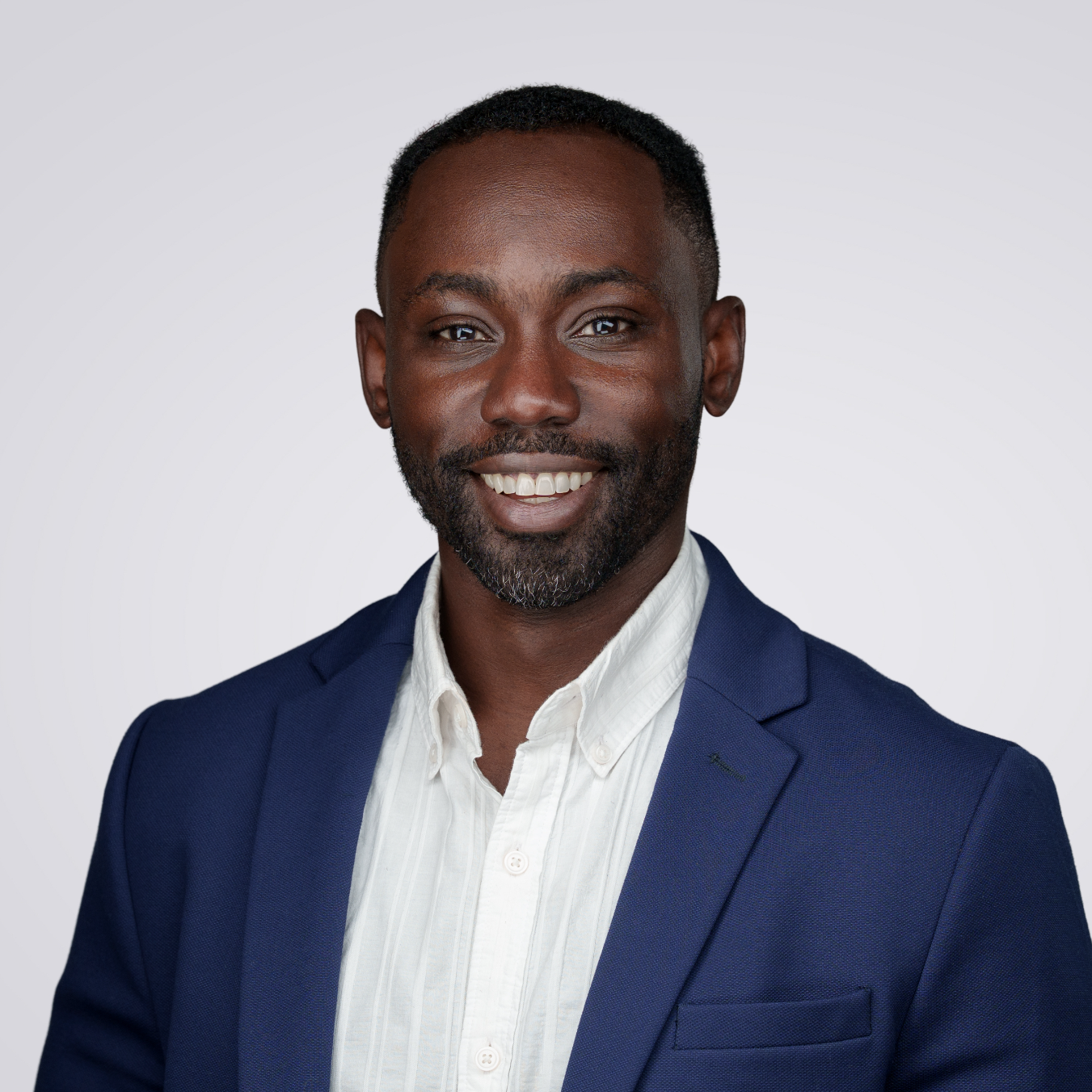 Kwame Marfo, Vice President, Product, Unlearn AI
Every clinical development team will adopt AI. The harder question: which AI is trustworthy enough to drive key decisions? Drawing on lessons from Unlearn's journey to achieving regulatory qualification, this talk will show how trust earned once compounds across planning, monitoring and analyzing clinical trials. We’ll highlight design considerations for AI to accelerate human judgment and enable teams to run faster, more rigorous and interpretable clinical trials.
From Agentic TMF to Agentic Trial Execution: How Our First Deployment Shifted Mindsets Toward Running Clinical Trials Differently
 Paulius Ojeras, Vice President, Clinical Operations, Perceive Biotherapeutics
This talk shares a real-world journey of deploying agentic AI teammates in clinical operations — from selecting the right use case (TMF management) to achieving fully autonomous, measurable results. The presentation covers key lessons learned and offers perspective on why the traditional vendor evaluation mindset fails for agentic AI, what mindset shift is the prerequisite for success, and how to distinguish solutions delivering true operational value from those adding complexity without impact.
Agentification of Life Sciences: Why Clinical Research Needs Agents—Not More Dashboards
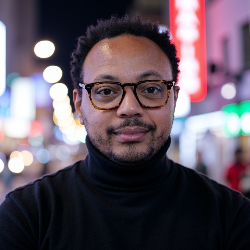 Youssef Idelcaid, Head of AI Research Center (ARC), Drug Development, Gilead
As clinical research teams chase faster timelines and earlier submissions, dashboards alone are no longer enough. This session explores the agentification of life sciences—how agentic AI systems can actively orchestrate trial design, operations, and regulatory authoring to compress critical paths. We will examine where agents deliver real acceleration today, and the governance, oversight, and validation guardrails required to scale speed without compromising regulatory trust.
 Partnering with AI-Enabled Sites to Unlock Real-Time Data, Drive Enrollment, and Accelerate Trial Timelines
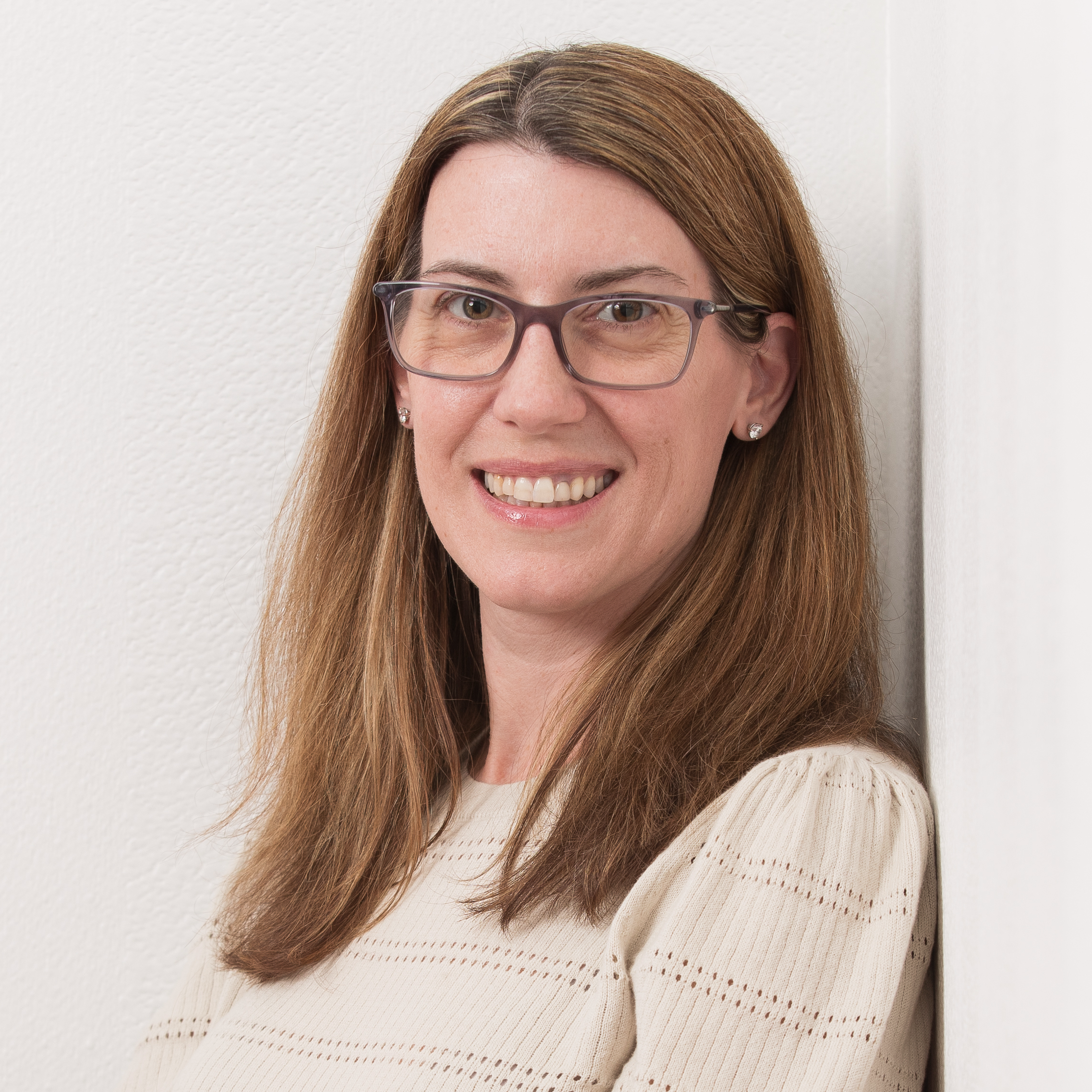

Clinical trials have long been a bottleneck in bringing breakthrough therapies to patients; AI is changing that by tackling some of the industry’s most persistent challenges. Sites are using AI to fundamentally change how they operate–improving efficiency, becoming fully data-driven, and eliminating guesswork in feasibility. Now, forward-thinking sponsors are partnering with AI-enabled sites at scale to optimize how they plan and run trials. In this session, Sanofi and Inato will discuss how they’re harnessing real-time site and patient data to confidently plan across Sanofi’s portfolio, accelerate trial timelines, and drive toward faster, higher, more predictable enrollment to bring medical breakthroughs to more patients globally.
11:30 amCoffee Break in the Exhibit Hall
FIT-FOR-PURPOSE AI IN CLINICAL DEVELOPMENT: A NECESSITY, NOT A CHOICE
Clinical Trial Delivery in the Agentic Era: From Tools to Teammates
 Samar Noor, Vice President, Head Clinical Data Insights and Analytics, Data and Quantitative Sciences, Bristol Myers Squibb Co.
This presentation explores how agentic AI can reshape clinical trial delivery by moving beyond isolated automation toward a new human + agent operating model. Rather than positioning AI as a replacement for clinical, data, statistical, or operational expertise, the session focuses on how agents can amplify human judgment, surface risk earlier, and strengthen execution across the clinical lifecycle.
Using examples from study design, data collection, cleaning, standards conformance, analysis readiness, and reporting, we will examine how agent-ready workflows can improve quality, reduce rework, accelerate decision-making, and create more proactive trial delivery. The discussion will also address the critical guardrails required for adoption, including human accountability, audit-ready lineage, validation, transparency, and governance.
Attendees will leave with a practical perspective on how organizations can integrate AI agents into clinical trial execution in a way that is scalable, compliant, and scientifically grounded and why the future of clinical research will be led by teams that combine human expertise with agentic scale.
Fit-for-Purpose AI in Clinical Trials
 Nagaraja "Sri" Srivatsan, CEO, Endpoint Clinical, Inc.
This panel brings together leaders from Pfizer, Bayer, BMS, and AbbVie. The discussion will focus on real-world use cases that demonstrate measurable business value. Panelists will share strategies for defining value, overcoming adoption barriers, and driving change management to embed AI into core processes. Attendees will gain insights into practical approaches for scaling AI initiatives, aligning stakeholders, and ensuring sustainable impact across the clinical-development lifecycle.
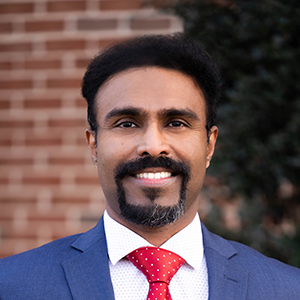

 LUNCHEON PRESENTATION: From Protocol to Execution: Powering Clinical Development with End-to-End, Verifiable AI
 Hamza Sheikh, Head of Business Development, PhaseV Trials, Inc.
As clinical trials become more complex, fragmented point solutions and rigid, fixed designs are no longer sufficient to address the growing challenges in development. Improving success rates, reducing cost, and accelerating timelines requires a fundamentally different approach, one built on vertically integrated, verifiable, and validated AI systems.
In this session, PhaseV presents a cohesive, end-to-end platform perspective on clinical development, spanning study design, patient stratification, site selection, and protocol-to-submission workflows. Framed through the lens of the “three Vs” that define PhaseV’s approach, we will demonstrate why true impact comes from connecting these capabilities into a single, unified system rather than deploying them in isolation.
Practical, real-world examples will be shared demonstrating how PhaseV’s multimodal AI platform delivers measurable efficiencies and improved outcomes across diverse clinical development programs.
PLENARY SESSION
The Next Leap: What AI Means for How We Work and What We Build
 Kristian Hammond, PhD, Professor, Computer Science, Northwestern University; Director, The Center for Advancing Safety of Machine Intelligence (CASMI)
Artificial intelligence is transforming every industry it touches, and clinical research is no exception. Generative AI tools like ChatGPT are rapidly becoming powerful partners in the work of designing, running, and accelerating clinical trials. In this talk, we’ll cut through the hype and look directly at how these systems can help us today—streamlining protocol development, speeding recruitment, reducing documentation overload, strengthening safety monitoring, and unlocking faster insights from the data you already collect. We’ll also take a quick look at what’s coming. As AI systems become more capable and more adaptive, they will reshape how trials are planned, executed, and evaluated. The question is no longer if this shift is coming, but how we prepare for it. And because clinical trials carry real stakes for patients and science, we’ll focus on what must be done to integrate AI responsibly, ensuring transparency, data integrity, regulatory alignment, and trust. This is about empowering trial teams with tools that make research faster, clearer, and more effective—while keeping humanity at the center of every decision.
Navigating the AI Era: Strategic Reflections from FDA Former Regulators and Technologists
 Kevin Bugin, PhD, Associate Vice President, Head, Global Regulatory Policy and Intelligence, Amgen
This executive-level session convenes past and present FDA leaders shaping AI policy to examine how regulatory expectations are adapting to new AI capabilities in clinical development. Panelists will discuss strategic priorities, policy evolution, and lessons learned from inside the Agency. The dialogue will equip industry innovators to engage regulators effectively and advance responsible AI adoption.


3:10 pmClose of Conference










Programs